Going Down the Drain
Come along on a tour of the Newtown Creek Wastewater Treatment Plant in Brooklyn.
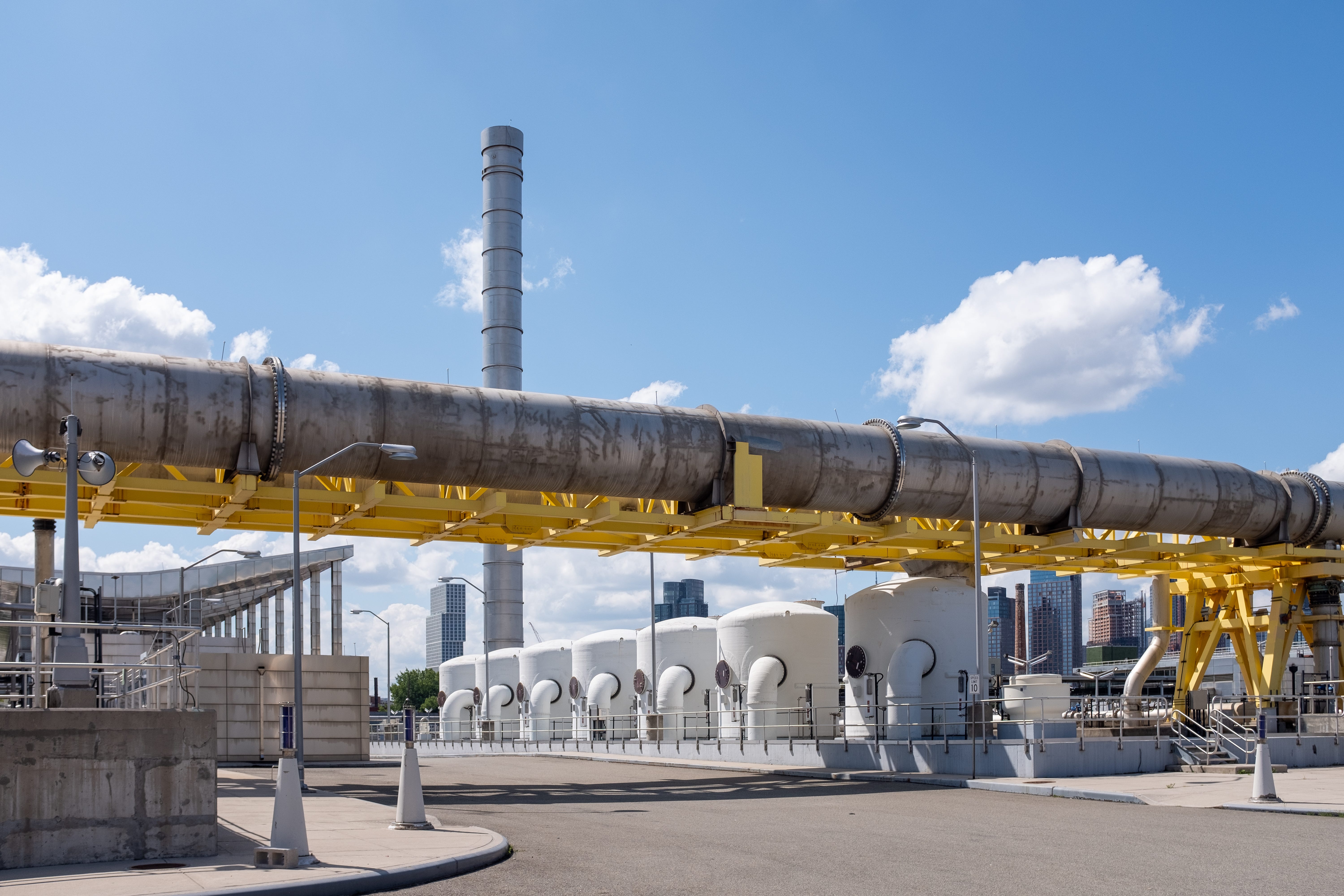
The City of New York Department of Sanitation runs a program called the Master Composter Certificate Course. People from all around the city gather in classrooms and processing sites to learn what goes into making compost.
The course requirements are six workshops, two field trips to local composting facilities, and 30 hours of volunteer events. In return for their civic service, master composters receive a hat, and the chance to take a closer look at how the greatest city in the world deals with all of its waste. Not exactly a fair trade, I know. What kind of loser would spend their summer shoveling compost and sticking their hands in “worm bins” just for some stupid hat?
Well, I’m almost finished with the program, and although I haven’t quite earned my hat yet, I have completed all the necessary field trips. But when I saw they were offering a tour of the Newtown Creek Wastewater Treatment Plant, I knew I couldn’t pass up an opportunity to check it out. Maybe I’d get extra credit, or who knows, two hats?
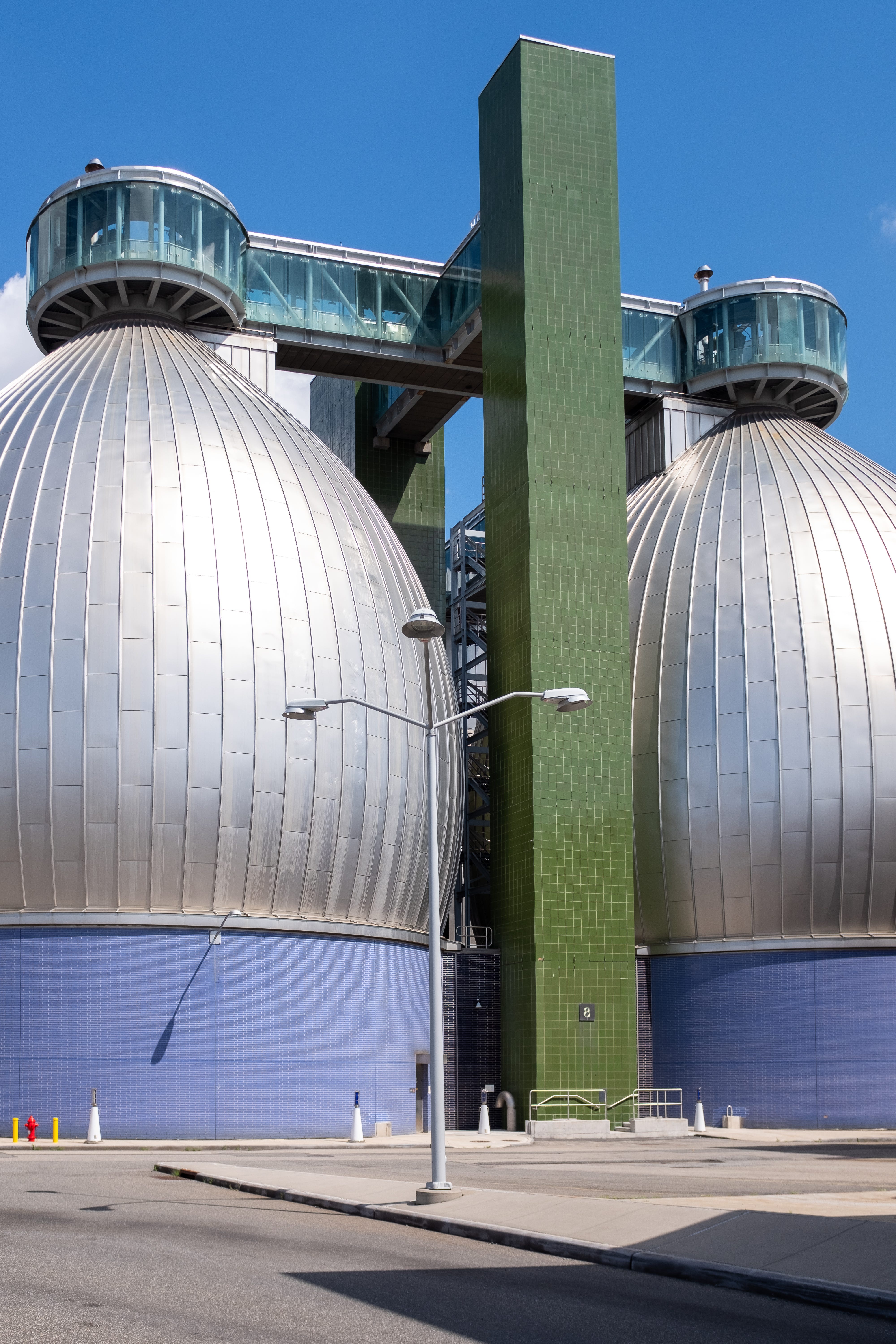
If you’ve spent any time in Greenpoint, it’s hard to ignore the massive metal eggs looming in the distance. Those bizarre, 140-foot tall structures hanging like balloons below the skyline are called digesters, giant containers used to turn sewage and food scraps into biogas and a nutrient-rich, pellet-like fertilizer.
Waste management systems are the sort of little, everyday miracles that most New Yorkers likely don’t think about too often. We drop our compost in the bin and it’s gone the next morning. We flush our toilet and the water washes everything away.
But where is it all going?
The average New Yorker uses about 75 gallons of water a day, and New York City as a whole uses 1.3 billion gallons of water every 24 hours. The NYC sewage system is comprised of 7,400 miles of pipes. To put that in perspective, if you were to lay everything out in a single line, it would stretch from Manhattan to Los Angeles and back again with more than 2,000 miles to spare.
Setting aside the massive complexity of building a network of pipes that reaches more than 8 million people, there’s the added challenge of designing a system that’s also flexible, because where all that sewage and wastewater is coming from changes day by day.
During the COVID-19 quarantine, when offices were shut down across the city, that suddenly meant there were a lot fewer toilets flushing in Manhattan (where the infrastructure exists to support the 1.6 million people who commute into the city every day). Instead, almost overnight, hundreds of thousands of people began working from home, using water in the other four boroughs at times of the day that were normally quiet. Still, the 174-year-old system held strong.
Weather can have a huge impact too. Hurricanes and heavy rain cause flooding which can quickly overwhelm the whole system as miles of storm drains start gulping down water along with whatever trash is floating in it. That’s why adding compost to street trees is such an important city-wide initiative, as it helps absorb excess rainfall by preventing it from splashing off the hard, compacted soil and into the sewer.
But by far the biggest obstacle our sewage system has to contend with are backups caused by cooking grease.
4,520 tons of food waste is produced a day in NYC. That’s 1,650,000 tons per year. Residences account for 654,000 tons per year, while commercial real estate (including retail, hospitals, city institutions, and offices) accounts for 1,000,000 tons per year. Of all that food waste, 174,465 tons per year is made up of just fats, oils, and grease.
Over time, this grease creates what are known as “fatbergs,” giant globs of grease filled with everything they’ve clung onto as they passed through the pipe. They’re pretty gross, and expensive too. The city spent roughly 18 million dollars in 2018 battling grease buildup and preventing these fatbergs from accumulating.
With the passage of the Zero Waste Act this year, NYC is rolling out a citywide curbside composting program, and now has a goal of diverting 100% of recyclable and organic waste from landfills and incinerators by 2030. To help accomplish this, the city is looking to Newtown Creek Wastewater Treatment Plant as a model for the future, a facility that can more sustainably process both food scraps and sewage.
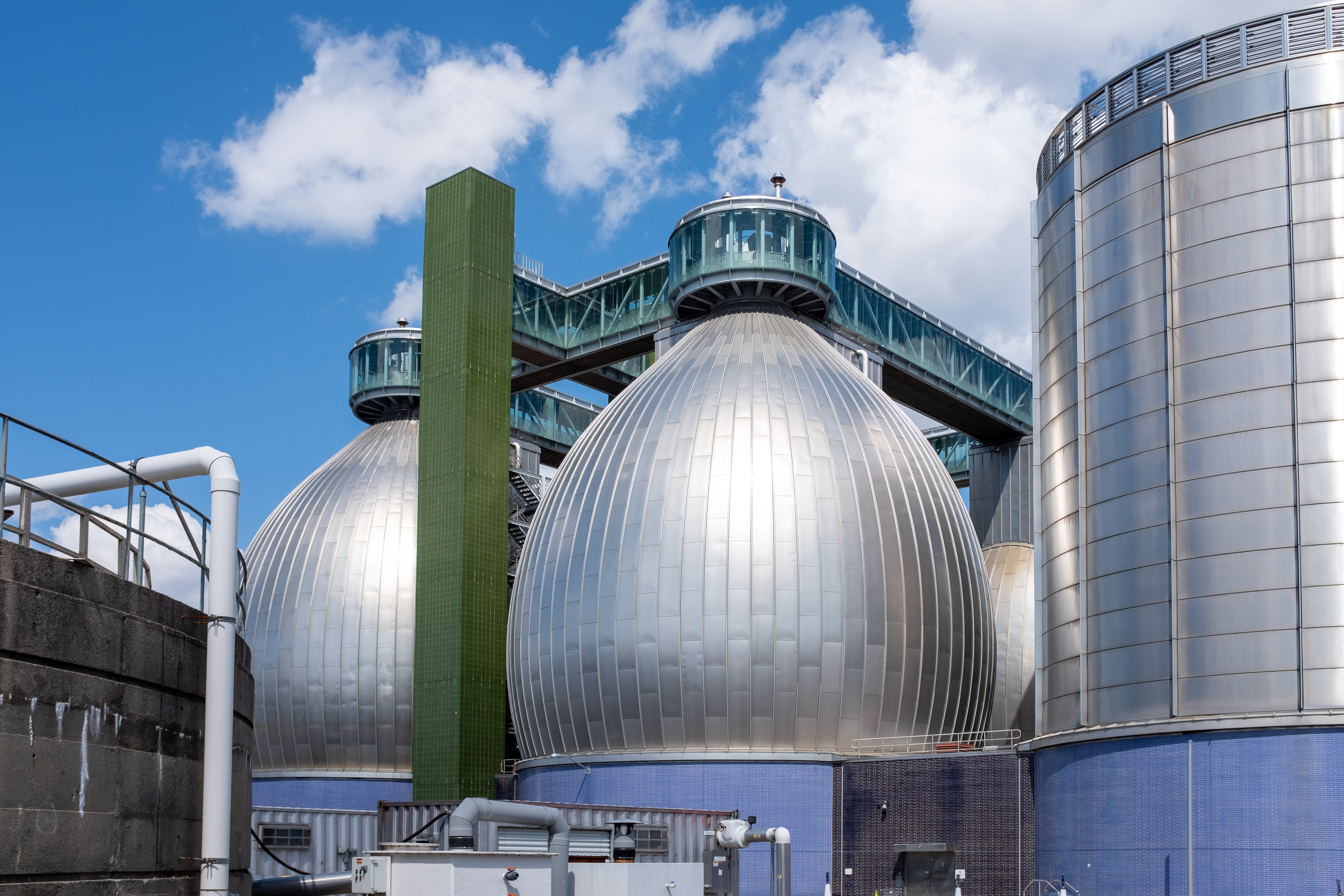
Originally built in 1967, the Newtown Wastewater Treatment Plant is the largest of the 14 total wastewater treatment facilities operated by New York City In 2009, a massive renovation was undertaken to increase plant capacity by 50% in compliance with the Clean Water Act, and as part of that process, the metal digester eggs were completed in 2010.
The plant serves an area that encompasses Lower Manhattan and parts of Brooklyn and Queens with a population of more than 1 million people. The biogas produced at the facility heats 5,200 homes in Brooklyn, reducing annual greenhouse gas emissions by more than 90,000 metric tons. That’s an amount that’s, “the equivalent of removing nearly 19,000 cars from the road per year or growing 1.5 million trees for 10 years,” according to the NYC Department of Environmental Protection.
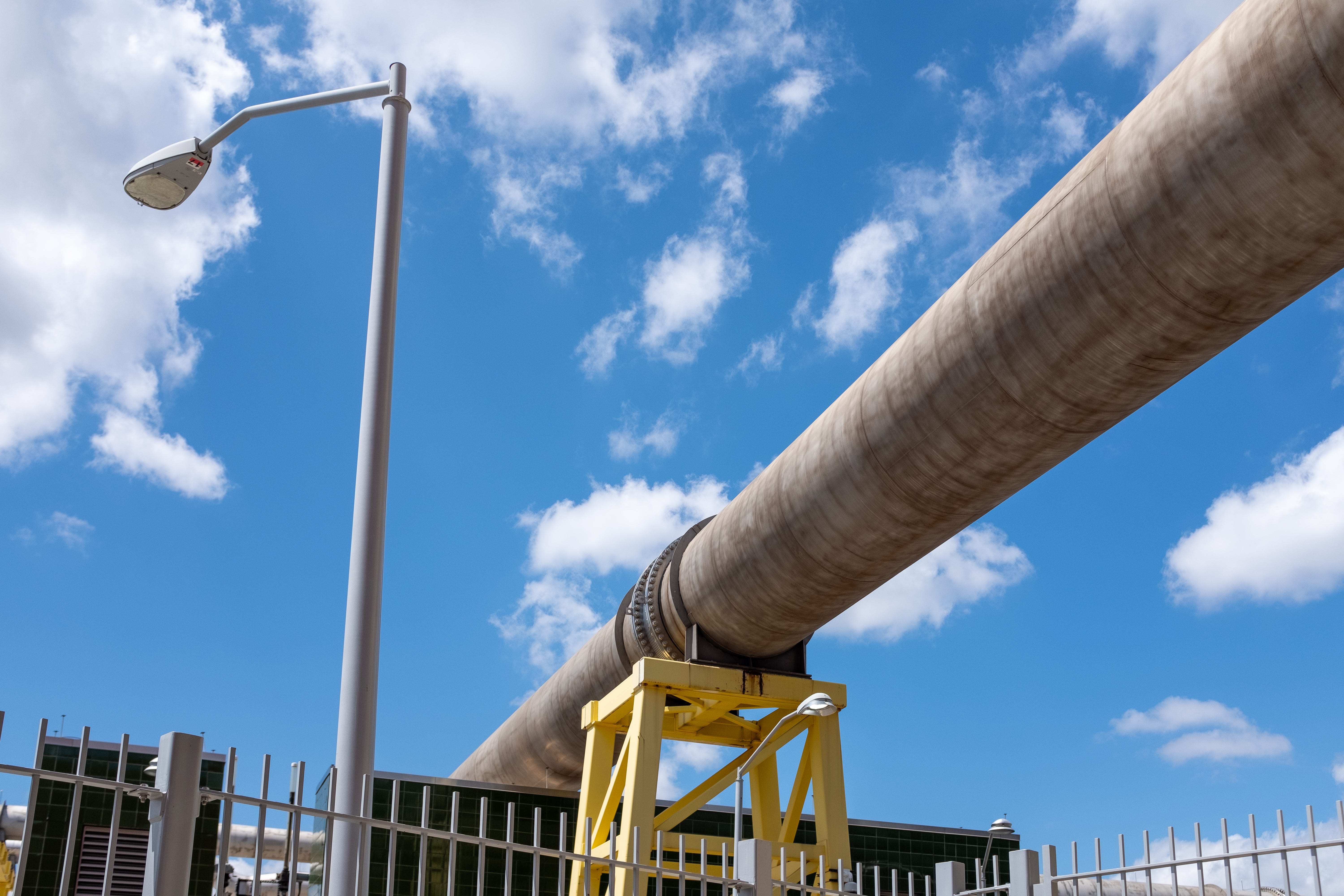
Photos aren’t allowed on the interior of the facility, but here’s a step-by-step breakdown of how it works.
The first section of the plant is designed to sift out any trash that worked its way into the sewage system and remove it. The team has found all sorts of things during the screening process from cell phones, to kids toys, even a bicycle. Once that trash has been separated, it’s time to turn up the heat.
The rest of the facility works a lot like the human stomach. The compostable food waste that’s received at the plant is processed to filter out any contaminants, broken down into smaller pieces, and turned into what’s called a “bioslurry.” That mixture is then combined with sewage and heated to 98° in the tanks for 30 days. As anaerobic digestion begins, bacteria starts to break down all the organic matter inside.
During the digestion of that bioslurry, methane gas called “biogas” is recovered and used for heat and electricity. By recovering this resource instead of allowing it to be released into the atmosphere through the usual decomposition process, greenhouse emissions are reduced.
The remaining sludge is then transported by marine vessel to be dewatered. That dewatered sludge is known as “biosolids,” and it can be added to agricultural soils or composted. Meanwhile, the wastewater that’s removed is treated with sodium hypochlorite (the same chemical found in household bleach) to deactivate the remaining microorganisms. That clean, treated water is then released into the nearest waterway where the process begins all over again.
It’s not a perfect system, but the NYC Department of Environmental Protection has high hopes for the Newtown Creek Wastewater Treatment Plant. It’s an impressive feat of engineering with a real shot at helping New York City achieve its Zero Waste goals by 2030, and a strong step in the right direction for a city with such massive and unwieldy waste management problems left to solve.
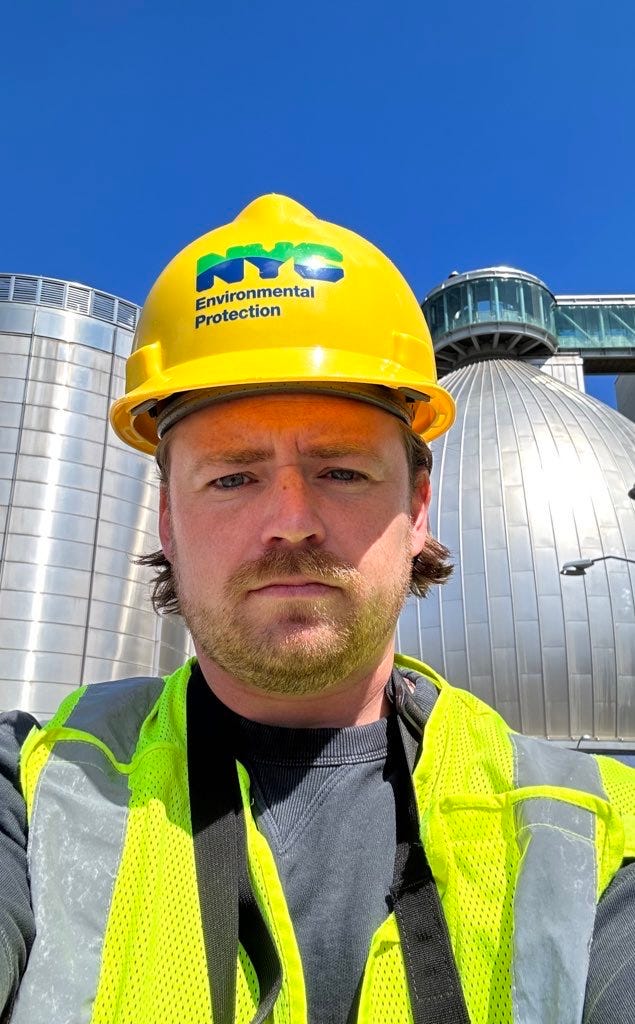
If you’re interested in joining the Master Composter Program, you can sign up here.
Street Tree Care volunteer opportunities can be found here. I’m at all the ones in Crown Heights. Come say hi.
P.S. — Here are a few things you can do to make the lives of the people who work at the Newtown Creek Wastewater Treatment Plant and keep the city running smoothly a little easier.
Save Your Grease
Instead of dumping it down the drain, use a coffee filter or paper towel over a strainer, and pour your grease into a mason jar with a lid. Keep it in the freezer to keep the fat from going bad. You can use this in place of butter or oil to make biscuits or roasted vegetables.
Only Flush the Four P’s
Poop, puke, (toilet) paper, and pee.
Pick Up Trash
Keeping streets and sidewalks clean means there’s less that will end up getting sucked down a storm drain later on.
Add Compost to Street Trees
This helps absorb excess rainfall, and prevents the sewage system from becoming overwhelmed. You can find places to pick up free finished compost here.
Conserve Water During Peak Hours When Possible
The city’s Wait... app shows when there’s water usage alerts in your area, so you can hold off on using large amounts of water until the time is right.